 how-to
How Do You Recognise and Reward Early Childhood Educators?
Last Updated: October 27, 2026
Quick Summary
Recognising early childhood educators works best when it is specific, timely and built into everyday routines rather than saved for once-a-year events. Start by learning what each educator values, then use a rhythm of everyday, weekly and seasonal recognition that reaches everyone fairly.
- Ask each educator what kind of thanks makes them feel most appreciated.
- Build recognition into three layers: everyday, weekly and seasonal.
- Write appreciation messages that name the person, the action, the impact and a clear thank-you.
- Check monthly that recognition is reaching casual, part-time and support staff, not only room leaders.
- Start with one or two habits, such as a weekly shout-out and a fortnightly handwritten note.
Table of Contents
- Why Recognition Matters More Than Most Leaders Realise
- Start by Understanding What Each Educator Values
- Staff Recognition Ideas for Early Learning Teams
- Writing Staff Appreciation Messages for Educators
- Peer-to-Peer Recognition in Early Childhood Education
- Keeping Recognition Fair, Consistent and Genuine
- Building a Culture of Appreciation at Work
- Booking Your Next Step: Make Recognition Part of Your Culture
- Frequently Asked Questions
Why Recognition Matters More Than Most Leaders Realise
Recognition is one of the simplest ways to show your team that their work counts. Yet many leaders focused on recognising early childhood educators leave it until something goes wrong, or assume the team already knows they are valued.
Educators spend their days meeting children's needs, supporting families and managing a demanding pace. Without regular acknowledgement, even dedicated people can start to feel invisible.
A common mistake is treating recognition as a once-a-year event. Recognition works best when it is specific, timely and part of everyday leadership.
Here is what good recognition tends to do for a team:
- Helps educators feel seen and respected
- Reinforces the behaviours you want to see more of
- Builds connection between colleagues
- Supports a positive team culture
Start by Understanding What Each Educator Values
Recognition only lands when it matches what the person actually values. One educator may light up at public praise, while another would much rather receive a quiet note or extra time to plan.
The easiest way to find out is to ask. Use a short, relaxed conversation during a one-to-one or a team meeting. If you want a structured starting point, the Self Directed Early Learning Culture Masterclass walks through how to build these kinds of conversations into your leadership routine.
Try asking questions like:
- What kind of thanks makes you feel most appreciated?
- What part of your work do you feel proud of right now?
- Is there anything you would like more recognition for?
Write the answers down. Keep them somewhere you will actually look before you plan your next round of appreciation.
Watch out: assuming everyone wants the same thing. Recognition that suits one person can feel awkward or even uncomfortable for another.
Staff Recognition Ideas for Early Learning Teams
Good recognition does not need a big budget, but it does need a rhythm. Recognition can be built into the ordinary week so it does not depend on someone remembering.
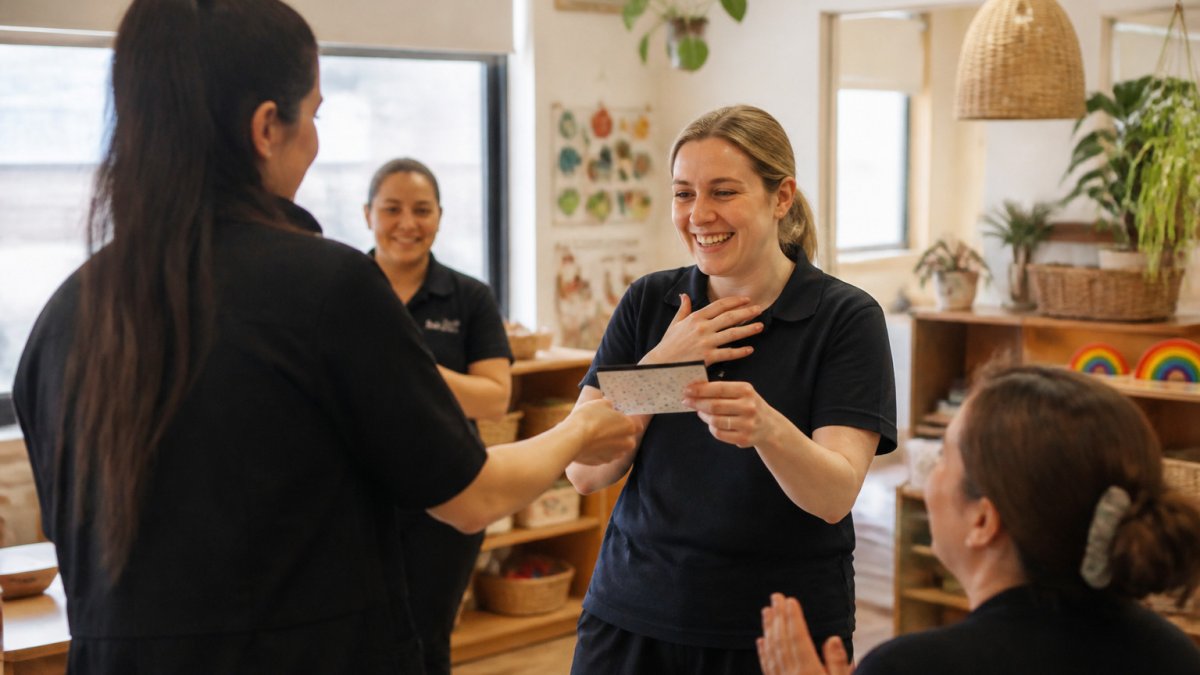
A simple way to think about it is in three layers: everyday, weekly, and seasonal. Each layer does a different job, and together they stop recognition from becoming a once-a-year event.
Everyday recognition (the layer most leaders skip)
This is the small, in-the-moment acknowledgement that costs nothing and lands hardest because it is timely.
- Name the specific action in the moment: "I saw you crouch down to that child's level before you spoke, that's why they settled so quickly."
- A handwritten note left in a pigeonhole or on the back of a daily report
- A quick verbal thank-you at handover, naming what you noticed
- A message on the staff room whiteboard that a colleague can add to
- Covering a shift so someone can attend their own child's event
- Asking an educator's opinion on a room decision and visibly acting on it
Weekly recognition (the layer that builds shared ownership)
A short, predictable slot in an existing meeting can make recognition part of the team's routine.
- A two-minute "what went well" round at the start of the team meeting, where each person names one thing a colleague did
- A rotating "shout-out" where one educator thanks another by name and says what they noticed
- A shared thanks board or notebook in the staff room
- A brief note in the centre newsletter or family communication naming a team effort (with the educator's agreement)
Seasonal recognition (the layer that marks the year)
These are the moments that punctuate the calendar, end of term, end of year, service anniversaries, qualification completions, and the everyday milestones that often go unmarked.
- A team morning tea where each person is named for something specific
- Acknowledging a completed qualification or professional learning milestone in front of the team
- Marking a service anniversary with a specific story about the person's contribution, not just a card
- Inviting an educator to lead a team activity they are good at, and naming that as recognition
Watch out: recognition that only reaches the same few people. If your list is dominated by full-time room leaders, casual assistants and support staff will quietly notice. The next section covers how to keep it fair.
Writing Staff Appreciation Messages for Educators
A good appreciation message is short, specific and sincere. It names the person, describes what they did and explains why it mattered.
A simple structure works well:
- Name the educator and the moment
- Describe the specific action you noticed
- Explain the impact on the children, families or team
- Thank them clearly
For example, you might write: "Sam, I noticed how calmly you handled the transition with the toddler room this morning. The children settled quickly, and the families felt reassured. Thank you for showing the team what that looks like."
Avoid vague messages like "great job" or "keep it up." They are nice to receive, but they do not show that you were paying attention.
Peer-to-Peer Recognition in Early Childhood Education
Recognition does not have to come only from leaders. When educators thank each other, it builds connection and shared responsibility across the team.
Peer recognition can be simple to start:
- Add a "thank you" board in the staff room
- Invite educators to share one win from the week at the start of a meeting
- Create a shared space where colleagues can post quick notes of thanks Small tokens of gratitude often serve as a meaningful supplement to these daily interactions, and selecting thoughtful appreciation gifts for teachers can reinforce the culture of mutual respect within your team.
Keep peer recognition genuine. If it turns into a box-ticking exercise, people will notice quickly. Tools like the Culture Booster Cards can help prompt these conversations in team meetings without making them feel forced.
Keeping Recognition Fair, Consistent and Genuine
Fairness is where most recognition efforts quietly fail. If recognition feels random, or keeps landing on the same visible people, it can damage trust rather than build it. A simple system for recognising early childhood educators can make fairness visible to you and to the team.
Start with a coverage check, not a feelings check
Once a month, look back over who you have recognised and ask three questions:
- Did anyone get recognised twice while someone else got nothing?
- Were casual, part-time, newer and support staff included, not just full-time room leaders?
- Was the recognition tied to something specific the person actually did?
A simple notebook page or a shared document with names down one side and the month across the top is enough. The point is not bureaucracy, it is that you cannot see a pattern you are not recording.
Make recognition work across shifts and work arrangements
Casual educators, assistants, cooks, cleaners and people on different shifts may be missed when they are not in the room for the shout-out.
- Rotate the timing of your weekly recognition slot so it is not always the same shift that hears it
- Leave written notes for people who are not on shift when you notice something
- Ask room leaders to pass on specific observations about casual staff to you, so recognition does not depend on you being everywhere
- Include support and non-room roles in the same recognition rhythm, a cook who quietly adapts a menu for a child with allergies deserves the same specific thanks as a room leader
Keep it specific and true
Generic praise ("great job", "keep it up") is pleasant but forgettable. Specific recognition names the moment, the action and the impact. If you cannot describe what the person actually did, wait until you can, vague recognition can feel worse than none.
Check whether it is landing
You do not need a formal survey to know whether recognition is working. A few simple signals tell you a lot:
- Ask in one-to-ones: "Do you feel your work is noticed here? What would feel meaningful to you?"
- Watch whether educators start recognising each other without prompting
- Notice whether the same people keep being recognised, or whether the spread is widening
- Pay attention to whether people are mentioning recognition in exit conversations, or whether its absence comes up when morale dips
Keep it genuine
Recognition should feel true to the person receiving it. If you are unsure whether a message will land well, especially public praise for someone who prefers quiet acknowledgement, ask a trusted colleague for an honest view before you deliver it. The goal is not perfect recognition. It is a steady, fair rhythm that helps every educator feel seen, not just the ones who are easiest to notice.
Here is a quick monthly check to see whether recognition is reaching everyone on the team.
| Check | Question to ask | Why it matters |
|---|---|---|
| Repeat recognition | Did anyone get recognised twice while someone else got nothing? | Spots uneven attention |
| Coverage | Were casual, part-time, newer and support staff included? | Stops quiet groups being missed |
| Specificity | Was the recognition tied to something the person actually did? | Keeps praise genuine |
| Spread over time | Is the group recognised widening, or staying the same few people? | Shows whether it is working |
Building a Culture of Appreciation at Work
Recognition is most powerful when it becomes part of how your centre works, not something that depends on one leader remembering to do it.
Start small. Pick one or two habits, such as a weekly shout-out in the team meeting and one handwritten note each fortnight. Once these feel natural, add more.
Over time, educators can recognise each other and look for good work to celebrate. Appreciation can become part of the culture.
The goal is not perfect recognition. It is a steady, sincere rhythm that helps people feel valued every week.
Booking Your Next Step: Make Recognition Part of Your Culture
Want to talk about what's happening in YOUR team?
Sometimes it helps to talk it through with someone who understands the people side of leadership.
Book a 1:1 Culture Chat with me. We'll talk about what's happening in your team, what's getting in the way and where I'd suggest you start.
No generic advice. Just a real conversation focused on you, your team and what you need right now.
Frequently Asked Questions
How can leaders recognise early childhood educators in meaningful ways?
Meaningful recognition is specific, timely and tied to the work an educator actually does. Instead of a general thank you, name the moment: how an educator settled a distressed child, planned an inclusive experience or supported a family through a hard day. Ask educators how they like to be appreciated, because some want public acknowledgement and others prefer a quiet conversation. Consistency matters more than grand gestures, so build recognition into weekly routines such as team meetings, handovers and one-to-one check-ins.
What are practical ways to reward early childhood educators without relying on one-off events?
Options include regular recognition moments in team meetings, a shared board where educators note colleagues' contributions, flexible scheduling for a particular need, professional development support or a personalised note. The key is repetition: a small, sincere gesture each week can make recognition part of the team's routine.
How can you make staff recognition fair and consistent across a team?
Fairness starts with clear criteria. Agree on what the service values, such as collaboration, child safety, reflective practice or support for colleagues, and check recognition against those values rather than personal favourites. Make sure part-time, casual and relief educators are included, not just those in visible roles. Review recognition patterns every few months and ask whether any educator has been overlooked.
How often should leaders recognise educators' contributions?
Recognition can be frequent and small rather than rare and large. A short acknowledgement after a shift, a note in a team meeting or a message after a difficult day are possible ways to recognise contributions. The right rhythm is one that feels natural to your team.