
 listicle
Benefits of Play-Based Learning for Early Childhood
Table of Contents
- What Is Play-Based Learning?
- Cognitive Development Through Play-Based Learning
- Social and Emotional Development Benefits
- Physical and Motor Skills Development
- Play-Based Learning and the Early Years Learning Framework
- How Play-Based Learning Prepares Children for School
- Play-Based Learning Activities for Toddlers
- The Role of Educators in Play-Based Environments
- Frequently Asked Questions
Last Updated: September 25, 2026
What Is Play-Based Learning?
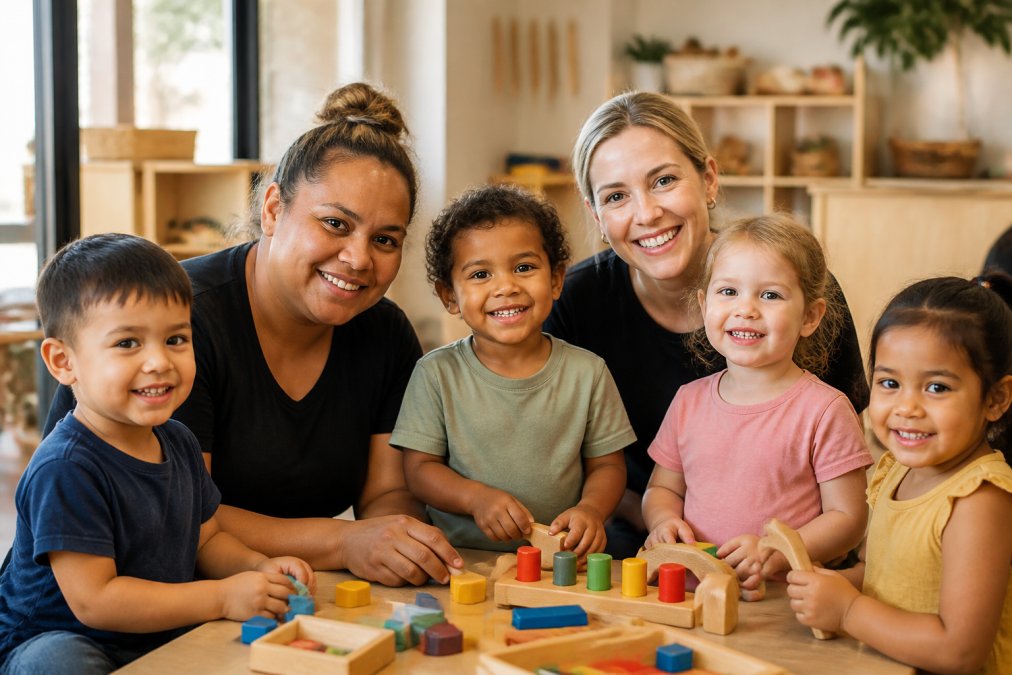
Play-based learning is an educational approach where children acquire knowledge, skills, and understanding through play rather than direct instruction. Educators create nurturing environments filled with open-ended materials, natural spaces, and opportunities for children to make choices about what interests them. A child building with blocks is exploring cause and effect, developing spatial reasoning, and collaborating with peers, all without worksheets. Rather than following a rigid curriculum, educators follow the child's lead, responding to their natural curiosity. Play-based learning benefits early childhood development across every domain and aligns with how young children's brains actually develop and learn best.
Cognitive Development Through Play-Based Learning
Play-based learning creates the conditions for problem-solving, critical thinking, and executive function to develop naturally. A child balancing blocks develops spatial reasoning and persistence; a child negotiating pretend-game rules builds language, social understanding, and decision-making skills. Research shows children who learn through play develop stronger cognitive foundations than those in structured, teacher-directed settings. Play allows safe experimentation and learning from natural consequences, resilience when a tower falls, persistence when a puzzle piece doesn't fit. When children pursue their own questions and interests, they develop intrinsic motivation and deeper understanding than memorised facts provide. Children who experience rich play environments develop stronger foundational skills in literacy and numeracy later on, approach problems with curiosity, and see themselves as capable learners.
Social and Emotional Development Benefits
Through play, children practise cooperation, negotiate conflicts, understand others' perspectives, and develop empathy. Playing house together teaches roles, relationships, teamwork, emotion management, turn-taking, and conflict resolution. Social-emotional learning embedded in play-based environments creates lasting change: children develop self-regulation, confidence through success, and genuine encouragement from adults. Play also creates space for children to process emotions and experiences through imaginative play. Resilience and empathy grow naturally when children experience authentic social feedback, peers move away when they're unkind, friendships deepen when they're generous. This teaches far more than any lesson could.
Physical and Motor Skills Development
Play-based learning environments prioritise movement, outdoor exploration, and hands-on engagement, building both gross motor skills (running, climbing, jumping) and fine motor skills (threading, drawing, manipulating objects). Natural spaces offer varied terrain, loose materials, and risk-taking opportunities that develop balance, body awareness, strength, and coordination. Fine motor development happens through everyday activities like building with blocks, painting, threading beads, and manipulating play dough, skills driven by the child's own interest. Physical play also supports mental health and emotional regulation: movement releases tension, builds confidence, improves focus, and helps children manage emotions.
Play-Based Learning and the Early Years Learning Framework
The Early Years Learning Framework guides early childhood education across Australia and emphasises play-based approaches as fundamental to quality practice. The framework recognises five learning outcomes, confidence and involvement, creative expression, engagement with others, world exploration, and sense of self, all naturally supported through play. Play-based learning benefits align with the framework's vision of children as capable, curious learners who construct their own understanding. Educators observe children at play, document their learning, and intentionally design environments that extend and deepen play-based exploration, ensuring play remains meaningful and developmentally appropriate.
How Play-Based Learning Prepares Children for School
Parents sometimes worry that play-based learning won't prepare children adequately for formal schooling. This concern stems from a misconception that play and learning are separate, and that 'real learning' requires worksheets and direct instruction. In fact, children who experience rich play-based learning are exceptionally well-prepared for school transitions and academic learning.
Many adults grew up in traditional classrooms where learning meant sitting still and listening, while play happened separately at recess. This mental model makes it difficult to recognise that play is learning. When a child builds a tower with blocks, they're developing spatial reasoning, understanding gravity and balance, practising problem-solving, and building persistence. When a child negotiates pretend-game rules with peers, they're developing language, social understanding, conflict resolution, and executive function. These are the exact skills that underpin school success.
Research consistently shows that children from play-based learning environments outperform peers from traditional, academic-focused settings on measures of school readiness and long-term academic achievement. The Early Years Learning Framework explicitly recognises play-based learning as the foundation for all five learning outcomes, evidence-based practice endorsed by educational authorities.
The foundational skills play-based learning builds, sustained attention, following instructions, cooperation, confidence, self-regulation, independence, and decision-making, are far more important for school success than early literacy or numeracy instruction. A child who can sit still, listen, cooperate, and approach challenges with curiosity is far more ready for school than a child who can recite the alphabet but struggles with emotional regulation or peer relationships.
Literacy and numeracy develop naturally through play-based learning in purposeful, connected contexts. A child building a shop learns to count and write price tags; a child following a recipe reads instructions and measures; a child writing a menu develops writing skills meaningfully. These authentic contexts create deeper understanding and better transfer to formal learning than isolated skill practice. When children learn to read because they want to read game instructions or write a sign for their block construction, the learning is intrinsically motivated and meaningful.
Children with strong play-based backgrounds adjust more easily to school's social and emotional demands. They have experience managing behaviour, working with others, and persisting through challenges. They see themselves as learners, approach new tasks with curiosity rather than anxiety, and have developed independence. These children settle into school routines more quickly, form friendships more readily, and engage with learning more enthusiastically than peers from primarily academic, adult-directed early learning.
Schools expect children to listen, follow instructions, cooperate, manage emotions, solve problems, and approach learning with curiosity, all developed through play-based learning. Schools do not expect children to arrive reading fluently or doing complex maths; these skills are taught in school. A child with strong social-emotional skills, self-regulation, and a love of learning is far more ready for academic instruction than a child who has spent years in structured, academic-focused settings but struggles with peer relationships or self-regulation. Play-based learning is not a barrier to school success, it's the foundation for it.
Play-Based Learning Activities for Toddlers
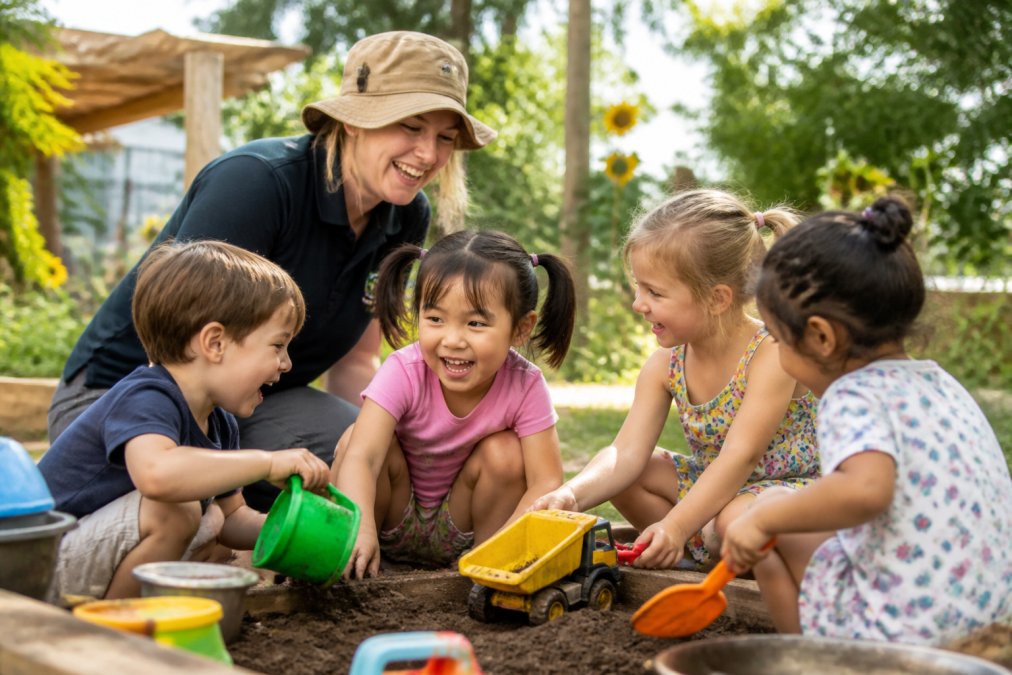
Toddlers learn through sensory exploration, repetition, and movement. Play-based learning activities focus on safe, engaging experiences that invite discovery within everyday routines and local environments. Water play during bath time, sand play at beaches or parks, and messy activities with paint, playdough, and natural materials invite investigation. Fill a shallow container with water and offer safe objects to explore: plastic cups, funnels, sponges, or leaves. Learning happens through the child's repeated, self-directed exploration, not adult instruction.
Local outdoor spaces provide natural loose materials, sticks, leaves, stones, bark, that toddlers can manipulate, carry, and combine in endless ways. These materials are free, developmentally appropriate, and far more engaging than plastic toys. A toddler moving sticks from one pile to another develops fine motor control, persistence, and spatial reasoning. Regular visits to the same outdoor spaces help toddlers develop familiarity and confidence, allowing them to take appropriate risks and deepen exploration.
Simple pretend play emerges in toddlerhood through repeated, unstructured opportunities. Offering props like pots, dishes, dolls, and toy animals invites imaginative exploration. Rather than buying themed playsets, collect real or real-like items from home: wooden spoons, plastic containers, fabric scraps, and baskets. Toddlers prefer authentic materials to plastic toys, and the open-ended nature of real objects supports more varied and creative play.
Movement and music support both physical development and emotional wellbeing. Dancing, singing, moving to music, and outdoor exploration on safe play equipment build confidence and coordination. Toddlers need plenty of opportunities to move freely, climb, run, and explore their physical capabilities. This might mean visiting local playgrounds regularly, dancing together at home to music you both enjoy, or simply allowing time for unstructured movement in safe spaces. The rhythm and repetition of songs and music also support language development and memory in ways that feel joyful and connected.
Book sharing and language-rich play support early literacy naturally. Reading together, singing songs, and narrating play experiences expose toddlers to language in joyful, connected contexts.
The Role of Educators in Play-Based Environments
The educator's role transforms in play-based learning environments. Rather than directing all activity, educators become observers, facilitators, and responsive partners. This shift requires a different mindset and skill set than traditional teaching.
Frequently Asked Questions
What are the main benefits of play-based learning for child development?
Play-based learning supports cognitive development through problem-solving and creative thinking, builds social and emotional skills through peer interaction, develops physical coordination and motor control, and fosters independence and decision-making. Research shows children in play-based environments develop stronger critical thinking abilities, better self-regulation, and greater confidence in learning. These foundational skills prepare children for formal schooling and lifelong learning success.
How does the Early Years Learning Framework support play-based learning?
The Early Years Learning Framework (EYLF) positions play as the primary vehicle for learning in early childhood education. It emphasises that play-based learning helps children develop across five key learning areas: communication, social and emotional development, language, literacy and numeracy, creative and physical development, and general knowledge and understanding. The framework recognises play as intentional teaching, where educators scaffold learning through purposeful observation and responsive interactions rather than formal instruction.
How does play-based learning prepare children for school readiness?
Play-based learning develops executive function skills including attention, self-control, and working memory that are essential for formal learning. Through play, children learn to follow instructions, collaborate with peers, manage frustration, and persist with challenges. These social-emotional capabilities, combined with emerging literacy and numeracy skills developed through playful exploration, create strong school readiness. Children who experience play-based learning typically transition to formal schooling with greater confidence, curiosity, and ability to engage with structured learning.
What play-based learning activities work best for toddlers?
Toddlers benefit from sensory exploration activities like water play, sand play, and texture exploration; simple construction play with blocks and loose parts; imaginative play with props and role-play scenarios; and movement play including dancing, climbing, and outdoor exploration. These activities should be open-ended, allowing toddlers to direct their own play while educators observe and gently extend learning. Repetition is important for toddlers, so offering familiar activities with small variations supports their developing understanding and confidence.