
 ultimate-guide
Early Childhood Leadership: A Practical Guide
Table of Contents
- What Early Childhood Leadership Actually Means
- Pedagogical Leadership in Early Childhood: Moving Beyond Management
- Early Childhood Team Culture Strategies That Stick
- Managing Difficult Conversations in Childcare Settings
- Building Team Accountability in Early Learning Without Blame
- Leadership Burnout: Protecting Your Wellbeing While Building Culture
- Creating Systems That Embed Culture Beyond Training
- Frequently Asked Questions
Last Updated: September 29, 2026
What Early Childhood Leadership Actually Means
Early childhood leadership is fundamentally about building a culture where educators feel connected, supported, and accountable, and where child safety, professional behaviours, and organisational values are embedded into everyday practice, not just written in a policy manual. It's the difference between a leader carrying the entire weight of culture alone and a team that owns it together.
Most early childhood leaders approach culture as something that happens after the work is done: a team-building day here, a training workshop there. But that's backwards. Culture either gets built intentionally through consistent systems and visible behaviours, or it drifts by default. There is no middle ground.
At Happy Team Culture, we've worked with hundreds of early learning leaders facing the same core challenge: how do you move from reactive incident management and one-off training to a workplace where educators genuinely understand what's expected, why it matters, and take responsibility for living it every day? The answer isn't more policies. It's practical systems that make culture visible and shared.
This guide covers the real work of early childhood leadership: how to shift from management to pedagogical leadership, build team culture that actually sticks, handle the difficult conversations nobody wants to have, and protect your own wellbeing while doing it. Strong culture does not happen by chance. Leaders need frameworks that help the whole team understand, own and consistently live the desired culture, without the leader carrying it alone.
Pedagogical Leadership in Early Childhood: Moving Beyond Management
Pedagogical leadership is not about managing rosters, compliance tasks, or incident reports. It's about influencing how educators think, decide, and act in their daily work with children and families. It requires a shift from "I need to control what happens" to "I need to build capacity in my team so they make good decisions independently."
The distinction matters because management focuses on systems and tasks. Leadership focuses on people and culture. A manager ensures the compliance checklist is completed. A pedagogical leader ensures educators understand why child safety matters, feel empowered to speak up when something doesn't feel right, and take shared responsibility for protecting children.
Many early childhood leaders struggle with this shift because they've been trained in management frameworks, not leadership ones. You learn to implement policies, track incidents, and ensure documentation is correct. Those things matter. But they're not the same as building a team that thinks like leaders themselves.
Pedagogical leadership in early childhood settings means:
- Facilitating reflective practice where educators examine their own decisions and behaviours
- Creating space for educators to ask "why" rather than just following procedures
- Building professional learning into everyday work, not treating it as separate training
- Modelling the behaviours and communication you expect from your team
- Asking questions that help educators solve problems rather than solving everything for them
This approach reduces burnout because the weight of culture shifts from one person to the whole team. It also improves child safety outcomes because educators are thinking critically rather than just complying.
Early Childhood Team Culture Strategies That Stick
Making values visible through everyday behaviours
Values written on a wall or in a staff handbook are invisible until someone demonstrates them. A child-safe culture isn't created by a training module, it's created when educators see their leader and peers speaking up about safety concerns, asking difficult questions, and treating those conversations as normal and expected.
Making values visible means translating abstract ideas into concrete, observable behaviours. Instead of "We value collaboration," define what collaboration looks like: educators planning together, sharing ideas without fear of judgment, asking for help when they're struggling, giving feedback to each other. Then notice and name it when you see it happening.
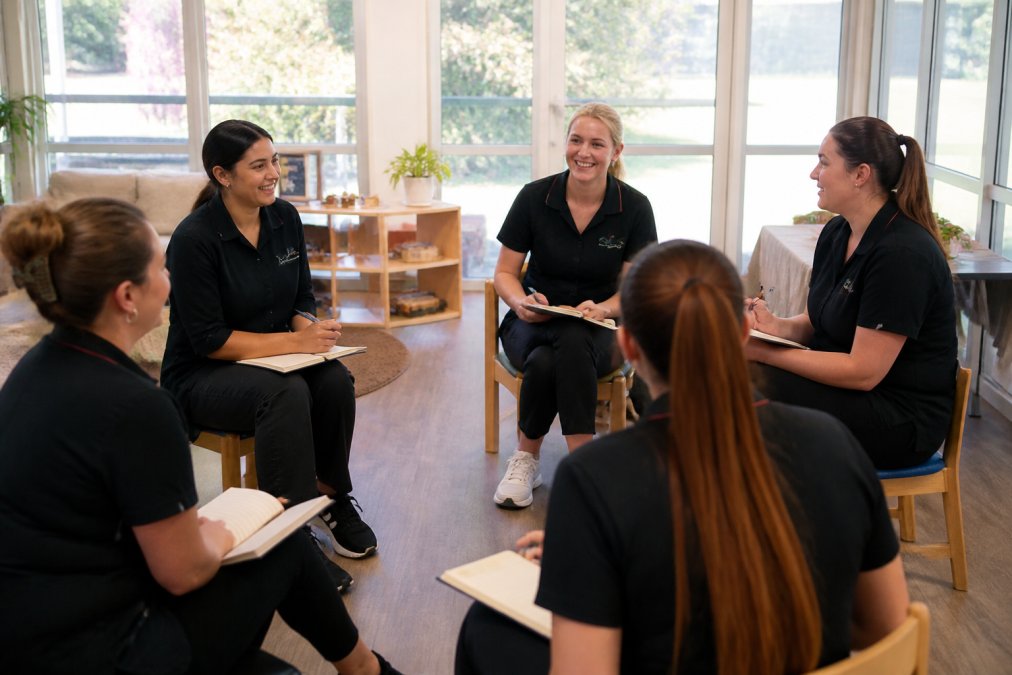
A practical system for this is a behaviour-mapping exercise. Take your core values and ask your team: "What does this value look like in action here?" Write down the specific behaviours. Use those behaviours as a reference point in team meetings, one-on-ones, and performance conversations. When someone demonstrates a behaviour that aligns with your values, name it explicitly: "I noticed you asked for help with the transition today instead of managing it alone, that's exactly what we mean by collaboration."
Creating psychological safety so educators speak up
Psychological safety is the foundation of a child-safe culture. If educators don't feel safe speaking up about concerns, mistakes, or near-misses, you won't know about problems until they become serious.
Many leaders say they want educators to speak up, but their actions communicate the opposite. A leader who responds to a mistake with blame creates silence. A leader who asks "What happened?" and listens without immediately jumping to consequences creates space for honesty.
Building psychological safety requires:
- Responding to mistakes with curiosity, not punishment
- Asking questions before giving answers
- Acknowledging your own mistakes and what you learned
- Following through on concerns people raise, show that speaking up leads to action, not retaliation
- Separating intent from impact in difficult conversations
This doesn't mean there are no consequences for serious breaches. It means the pathway to accountability includes understanding, learning, and support, not just punishment. Many leaders find that understanding the common pitfalls helps them build stronger safety systems, exploring resources like Why Child Safe Strategies Fail can reveal where well-intentioned approaches miss the mark.
Managing Difficult Conversations in Childcare Settings
Difficult conversations are where culture either strengthens or breaks. A conversation about inconsistent behaviour, a conflict between team members, a concern about someone's practice, these moments define what your culture actually values, not what you say it values.
Many early childhood leaders avoid difficult conversations because they're uncomfortable or because they worry about staff turnover. But avoiding them costs more: inconsistency spreads, good staff become frustrated, and unsafe practices continue.
The structure of a difficult conversation matters. Start with clarity about what you've observed and why you're raising it. Use specific examples, not generalisations. "I've noticed you sometimes respond to children's behaviour with frustration" is vague. "On Tuesday and Thursday this week, I heard you raise your voice with children during transitions" is specific and gives someone something to actually address.
Listen more than you talk. Many leaders use these conversations to explain why someone is wrong.
Building Team Accountability in Early Learning Without Blame
Accountability is often confused with blame. But blame is about punishing someone for failure. Accountability is about shared responsibility for outcomes and a commitment to doing better.
Leadership Burnout: Protecting Your Wellbeing While Building Culture
Set boundaries around your time and energy. You cannot be available to solve every problem at every moment. Decide what truly requires your immediate attention and what can wait until a team meeting or a scheduled one-on-one.
Creating Systems That Embed Culture Beyond Training
A single training session changes nothing. People attend, they nod, they forget by the next week. Culture only embeds when it's woven into everyday systems and routines.
Frequently Asked Questions
What is the difference between early childhood leadership and centre management?
Management focuses on operations: rosters, compliance, budgets. Early childhood leadership goes deeper, it shapes how your team thinks, communicates and behaves every day. Leadership builds the culture that makes compliance and operations actually work. A manager enforces a policy; a leader helps the team understand why the policy exists and own it together. This distinction matters because compliance training alone doesn't change behaviour, shared understanding and psychological safety do.
How do you build team accountability in early learning without creating a blame culture?
Accountability thrives when expectations are crystal clear and people feel safe to admit mistakes. Start by defining behavioural expectations together as a team, not imposing them top-down. When someone misses an expectation, have a conversation focused on understanding what happened and what support they need, not punishment. Use team meetings to celebrate when people get it right. When patterns emerge, address them early in a one-to-one conversation. This approach builds shared ownership because people see accountability as fair and supportive, not punitive.
What should early childhood leaders focus on to reduce staff turnover?
Staff stay when they feel connected, valued and clear about expectations. Three levers matter most: psychological safety (people feel safe to speak up and make mistakes), genuine appreciation (specific recognition of effort and impact), and shared ownership (people understand how their work contributes to the team's mission). Leaders who invest in these three areas see stronger retention because educators feel they belong. One-off team-building days or generic recognition don't address the deeper need for connection and clarity that keeps people engaged long-term.
How can leaders sustain team morale during high-pressure periods in early learning?
Burnout spreads when people feel unsupported and unclear about priorities. During pressure, be more visible and communicative, not less. Acknowledge the pressure openly, clarify what matters most right now, and remove non-essential tasks. Check in with individuals about their wellbeing. Celebrate small wins. Make sure breaks and time off are protected. Most importantly, model that you're managing your own wellbeing, leaders who appear stretched to breaking point signal that the culture doesn't value sustainability. Your team watches how you handle pressure and mirrors it.
Why do team-building workshops and training programs often fail to create lasting culture change?
Workshops create temporary energy but fade because they don't change daily systems and behaviours. People attend, feel motivated, return to work, and then the old patterns resume because nothing in the environment has shifted. Real culture change requires intentional systems: clear behavioural expectations visible every day, regular team conversations that reinforce values, leaders modelling the culture consistently, and feedback loops that help people course-correct. The Happy Team Culture Method works because it embeds culture into everyday practice, not into a one-off event.
What does pedagogical leadership mean in an early childhood setting?
Pedagogical leadership means leading through a lens of learning and child development. It's about helping your team understand the 'why' behind quality practice, not just the 'what'. A pedagogical leader asks questions like: How does this decision support children's learning? How do our team behaviours model what we want children to experience? This approach builds educators who think critically and own quality, rather than just following rules. It also creates a culture of reflective practice where continuous improvement is everyone's responsibility.